

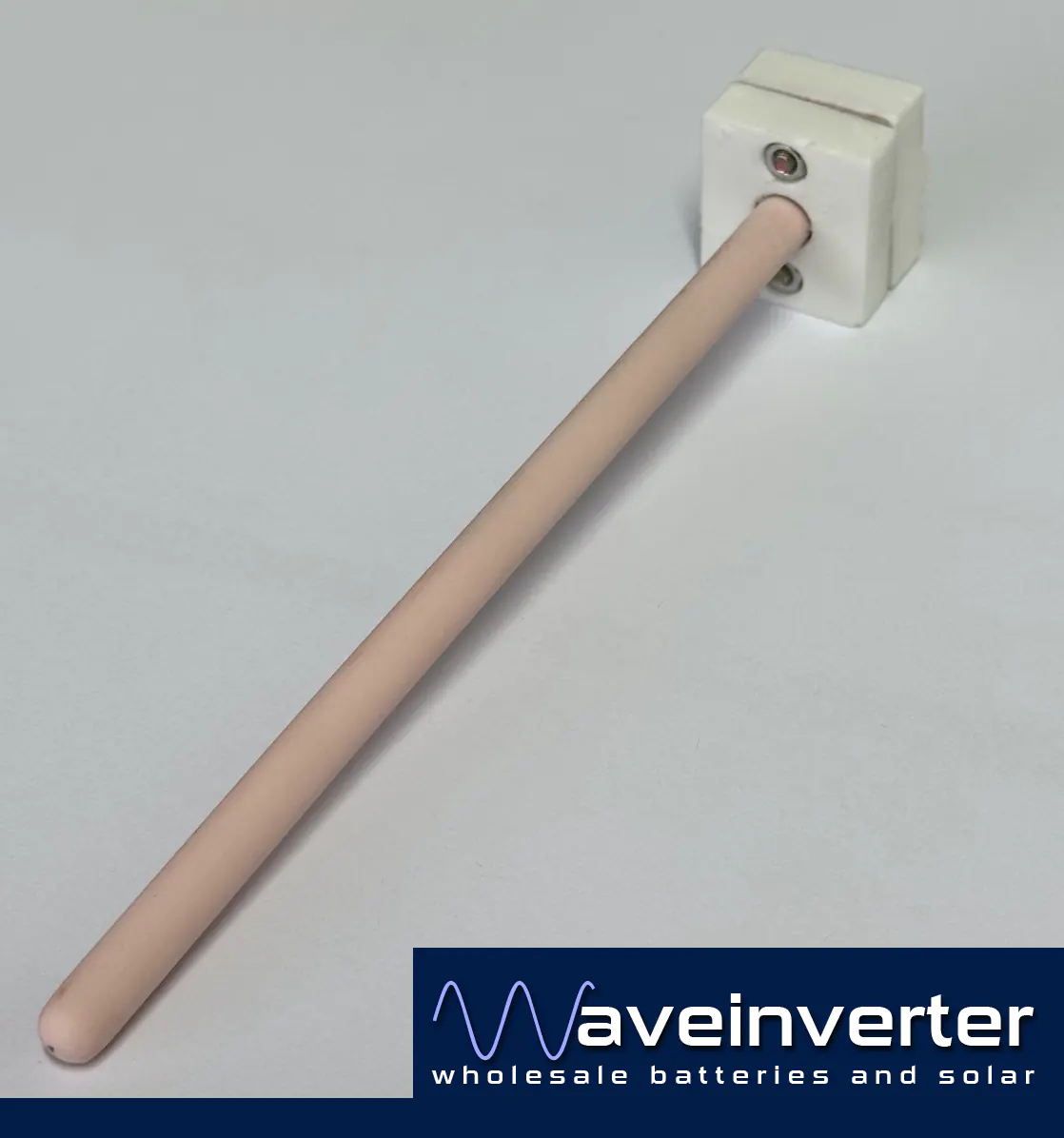
High Temperature Platinum Rhodium Thermocouple 1300°C
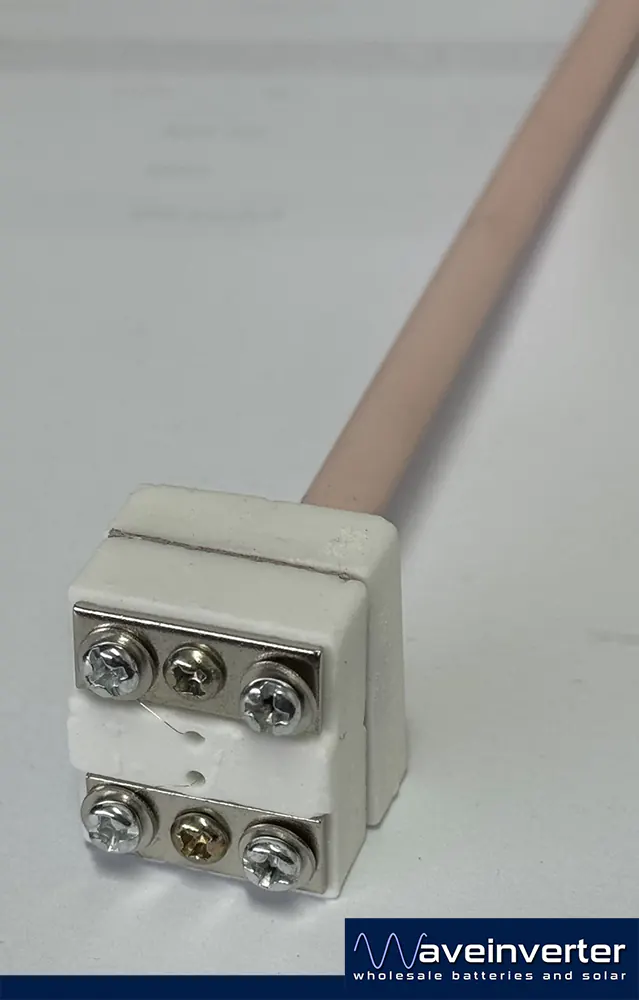
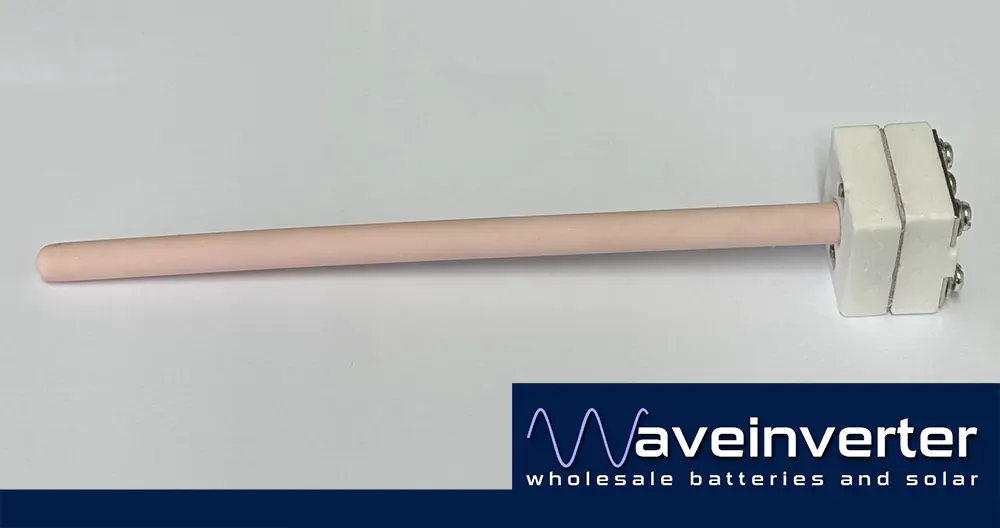
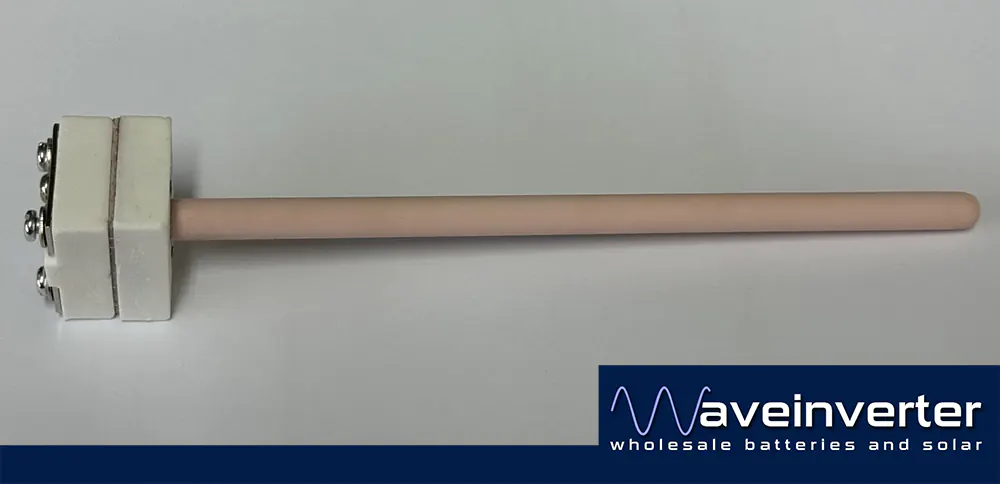
S type platinum rhodium probe in a corundum sheath, 1300°C long term and 1600°C short term. There is no cable on it, just a terminal head at the back for your own.
$125.00
Description
Suits our PID controllers and any controller or measuring device which uses the S type thermocouple.
This is a precious metal thermocouple, encased in extremely heat-resistant material.
Platinum rhodium wire offers heat-resistant and anti-corrosive properties, giving maximum longevity at 1300C for long periods of time.
Specifications
| Sensor | S type thermocouple, platinum rhodium |
|---|---|
| Measuring range | 0 to 1300°C long term, 0 to 1600°C short term |
| Cable length | None supplied |
| Probe length | 150 mm |
| Probe diameter | Approx 8 mm |
| Thread | None, the probe is not threaded |
| Sheath material | Corundum, aluminium oxide |
| Terminals | Terminal head at the back, for your own cable |
| Warranty | 12 months return to base |
Common questions about temperature controllers
Which temperature controller do I need?
Start with what you are controlling and what you have to power it with.
If you want to hold one temperature and switch one thing on and off, a plain digital controller does it, and it is the lowest cost way. If you need to run a heater and a cooler off the same setpoint, the dual relay model does both. If it is a freezer or a chiller that has to defrost itself now and then, use the defrost model, because that cycle is built into it. If you are controlling humidity as well as temperature, there is a combined unit for that. And if you are pumping between two tanks based on the difference between them, as in solar hot water or a pool, that is the dual system controller.
If you are not sure, tell us what you are heating or cooling and we will tell you which one fits.
What is the difference between the PID controllers and the plain digital ones?
A plain digital controller is a thermostat. It switches on below your setpoint and off above it, so the temperature wanders a little either side of where you set it. That's completely fine for a fridge, a glasshouse or a fish tank.
A PID controller measures how fast the temperature is moving and how far off it is, and adjusts as it goes, so it settles tightly on your setpoint instead of hunting around it. You need this where overshoot actually costs you something: a kiln, a furnace, heat treating, anything where going 10 degrees past your target affects the work.
Pay for PID when undershoot or overshoot matters.
Will it run off a battery, or does it need mains power?
Only the Digital Temperature Controller (12V DC powered) runs off 12V, and that's the one to use off-grid, in a boat, a caravan or a truck.
Everything else in this category is mains AC powered. If you need one of the mains models on a battery system you would need an inverter to run it, which we can sort out for you, but check first whether the 12V model already does what you want.
What sensor comes with it, and can I use a different one?
The plain digital controllers come with their NTC sensor on 1 metre of cable.
The PID controllers use a thermocouple instead, and the SS-Relay kit ships with a K type. The reason is range: an NTC sensor is made for the sort of temperatures a fridge or a glasshouse sees, and a thermocouple goes far higher.
Our REX-C100 PID controller also takes the popular RTD probe. You change the probe type in the controller settings and use the PT100 instead, which is what the homebrew probe is for.
We stock three probes on their own: the K type thermocouple, good to 1250°C, the platinum rhodium S type, good to 1300°C for long periods, and the PT100 RTD with a 1/2 inch thread and a 50 mm tip.
How much can the relay switch, and can I run my heater straight off it?
We have models from 3A up to 100A. The work to do is to know the peak amp rate that your load will pull through the relay. Also take into account surging if present. If you just know wattage figures, the maths is wattage divided by voltage, which gives you the amp rate.
Do I need the solid state relay, and does it need a heatsink?
The SS-Relay kit includes a 40A external solid state relay, and it is there so the controller is not switching your load directly.
If the current through that relay is over 11A you must fit a heatsink to it. A solid state relay makes heat in proportion to what it is passing, and without somewhere for that heat to go it will fail. The heatsink is an option you can add to the order.
Can it control heating and cooling at the same time?
Yes, on the models built for it. The dual relay controller has two onboard relays, one for a heater and one for a cooler, so it holds a temperature whether the ambient is running warm or cold. The PID controllers have heating and cooling control as well.
A single relay controller does one or the other, not both.
Can I use one on a fridge or a freezer?
Yes, and it is one of the most common uses. If it is a freezer or a chiller that needs to defrost itself periodically, use the Digital Temperature Controller with Defrost, which is designed for exactly that and runs the defrost cycle for you. Fitting a plain controller to something that needs defrosting means doing it yourself, or icing up.
Which one for homebrew or fermenting?
For fermenting, where you are holding a set temperature and may need to warm or cool depending on the day, the dual relay controller is the usual choice.
For mashing and boiling, where you want a tight temperature in liquid, the RTD PT100 probe is the one people buy: 1/2 inch thread, 50 mm tip, 2 metres of cable, and a spring sheath at the base of the probe so the cable does not fatigue where it enters. It works with our REX-C100 PID controller once you switch the probe type to RTD in the settings.
Can I use one for solar hot water or a pool?
Yes, that is what the Solar Water Heating Controller for Dual System is for. It works on the difference between two systems rather than one temperature: three temperature sensors, and two relays that run the pump and an optional additional heater. Solar hot water and pool or spa heating are the two things it gets used for most.
Not covered here? Tell us what you are heating, cooling or measuring and we will tell you which controller and which probe you need.
Additional information
| Shipping weight | .8 kg |
|---|

Reviews
There are no reviews yet.