

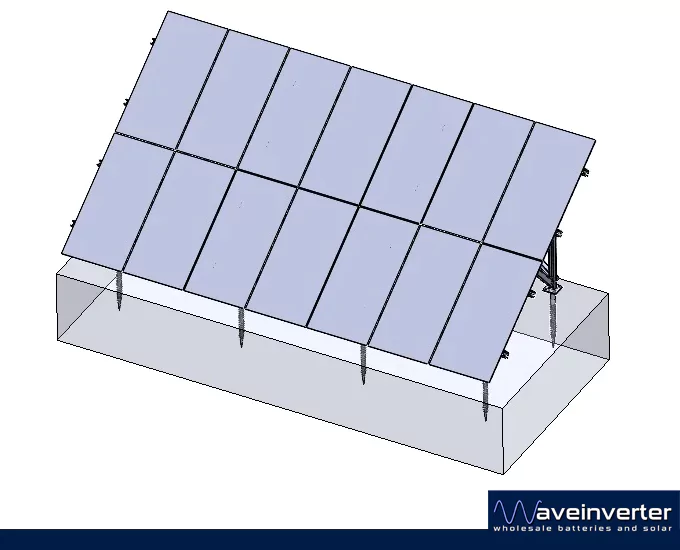
Solar Ground Mounting System for 14 large (1134mm) panels (up to 9500W)
Kitset steel frame for ground mounting 14 large panels up to 9500W, to AS/NZS 1170.2. Two rows of seven portrait at 40 degrees, 8.2 by 3.5 m of ground. Double braced, ZM275 coated steel, rated to 55 m/s.
$3,500.00
Description
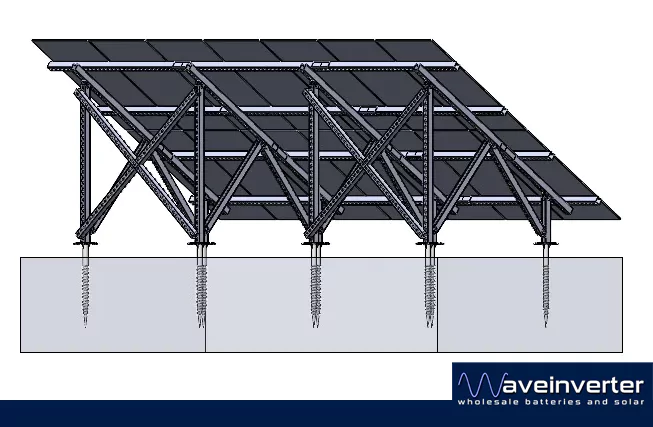
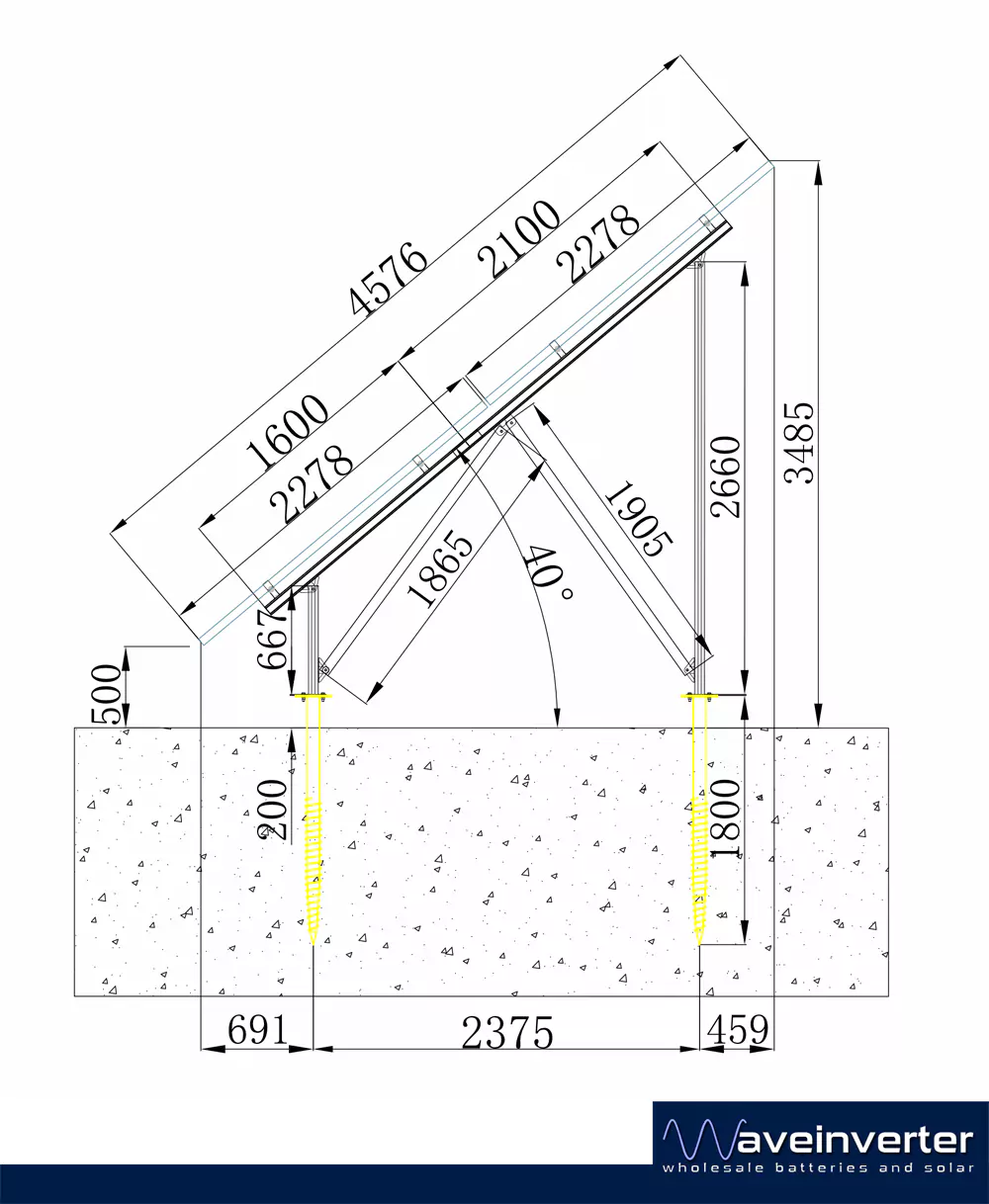
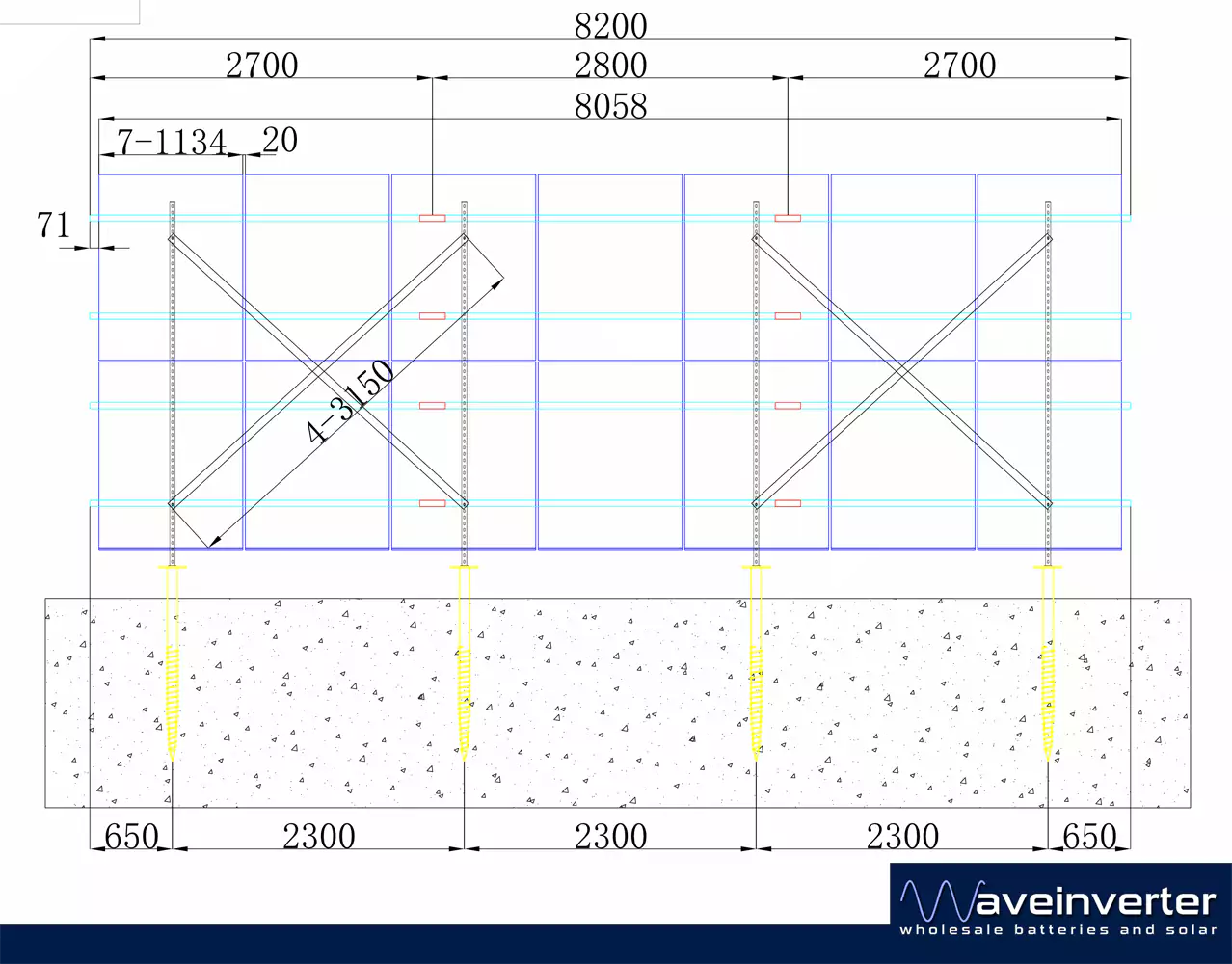
Complete solar panel ground mounting kit for 14 large panels, up to 1134 mm wide and 2400 mm long, in two rows of seven at 40 degrees. That’s up to ~9500W of panel on one frame. It needs 8.2 m by 3.5 m of ground space, and the top of the array sits 3.5 m up, which keeps it under the 4 m height limit in the building consent exemptions.
In our view it’s the most relevant solar ground mount sold in New Zealand. Designed for our specific coastal corrosion conditions and legislative requirements.
What’s different from our earlier frames
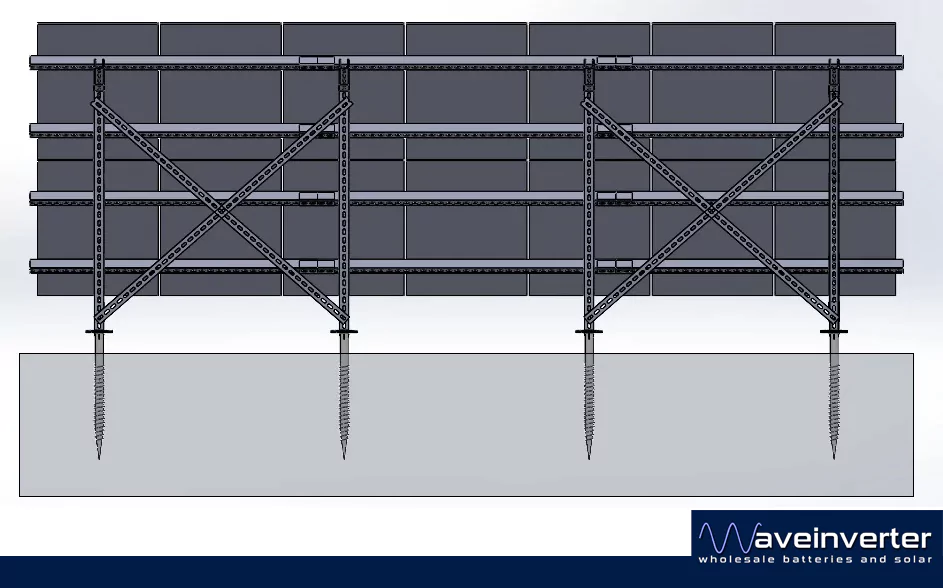
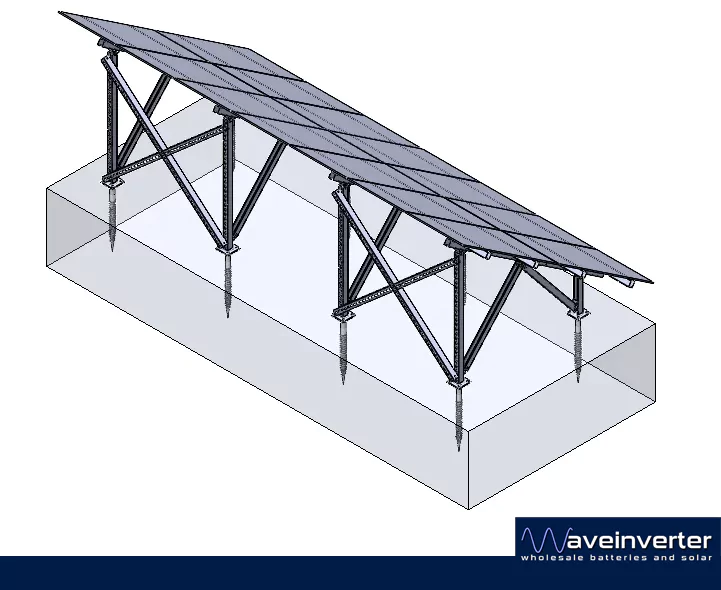
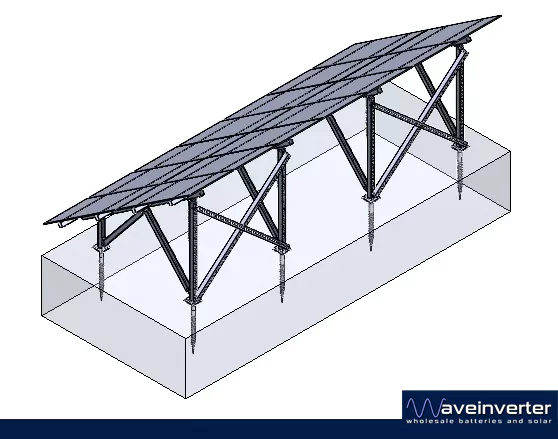
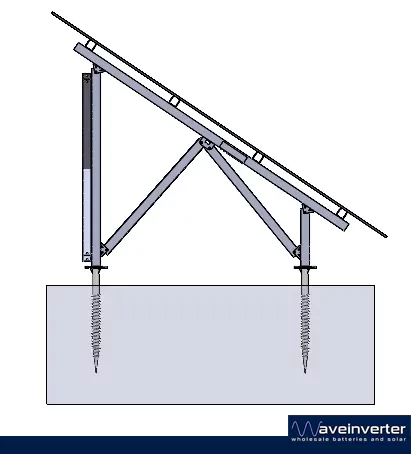
Three things. The bracing is doubled: every pair of legs now double braced, two struts in a V, up from single strut, and the two end bays are cross braced with a full X at the back. The steel is a stronger grade, S350 structural steel, with a yield strength of 350 MPa. And the corrosion coating is ZM275 rather than hot dip galvanising.
Why ZM275 matters
ZM275 is a zinc, aluminium and magnesium coating, 275 grams per square metre, put on the steel at the mill before the parts are cut and formed. Plain zinc protects steel by slowly sacrificing itself. Add magnesium and the surface forms a dense, stable layer that corrodes far more slowly, so the same weight of coating lasts a lot longer, and it protects cut edges and bolt holes as well, which is where a galvanised frame usually goes first. For a frame that spends its whole life outside in New Zealand’s salt air, this coating maximises its life.
Wind
Structural steel built to AS/NZS 1170.2, the wind loading standard, and rated for wind zones up to 55 m/s out of the box with no extra bracing or adjustment. The consent exemptions are capped at a design wind speed of 44 m/s (or a wind zone no worse than High), so the frame is never the limit. Your site’s wind zone is.
Panel clamps
Comes with panel clamps. Tell us your panel thickness when you order, 30 mm or 35 mm, and we send the matching set.
Holding it down
Fix it to the earth with ground screws, or with dynabolts into concrete. Ground screws are what we recommend: no concrete, in within minutes, and they come out again if the array ever moves. This frame takes 8 ground screws. Use the 1.6 m ground screws in firm ground and the 2.2 m ground screws on softer or uneven ground, where the extra length gives more grip on the earth. Give us information about your site soil type, and we can advise. Every set comes with the loan of the manual installation tool, so you put them in yourself with no machinery on site. For concrete, it’s a set of 16 dynabolts. We supply either separately.
Building consent
This frame carries 36+ square metres of panel and stands 3.5 m high at the back. On a rural zoned site it fits Schedule 1 exemption 28C, so no building consent is needed as long as it’s held down by more than one post (this one has eight), the top is under 4 m (it’s 3.5 m), it’s at least 5 m from any house, road, railway or boundary, and your wind zone is no worse than High (or your design wind speed is 44 m/s or less). Outside a rural zone the 28C limit is 20 square metres per array, so this frame comes under exemption 48 instead, which covers 20 to 40 square metres and needs a Chartered Professional Engineer to design or review the fixings. Your council’s district plan says which zone you’re in.
Installing a ground mount solar kit
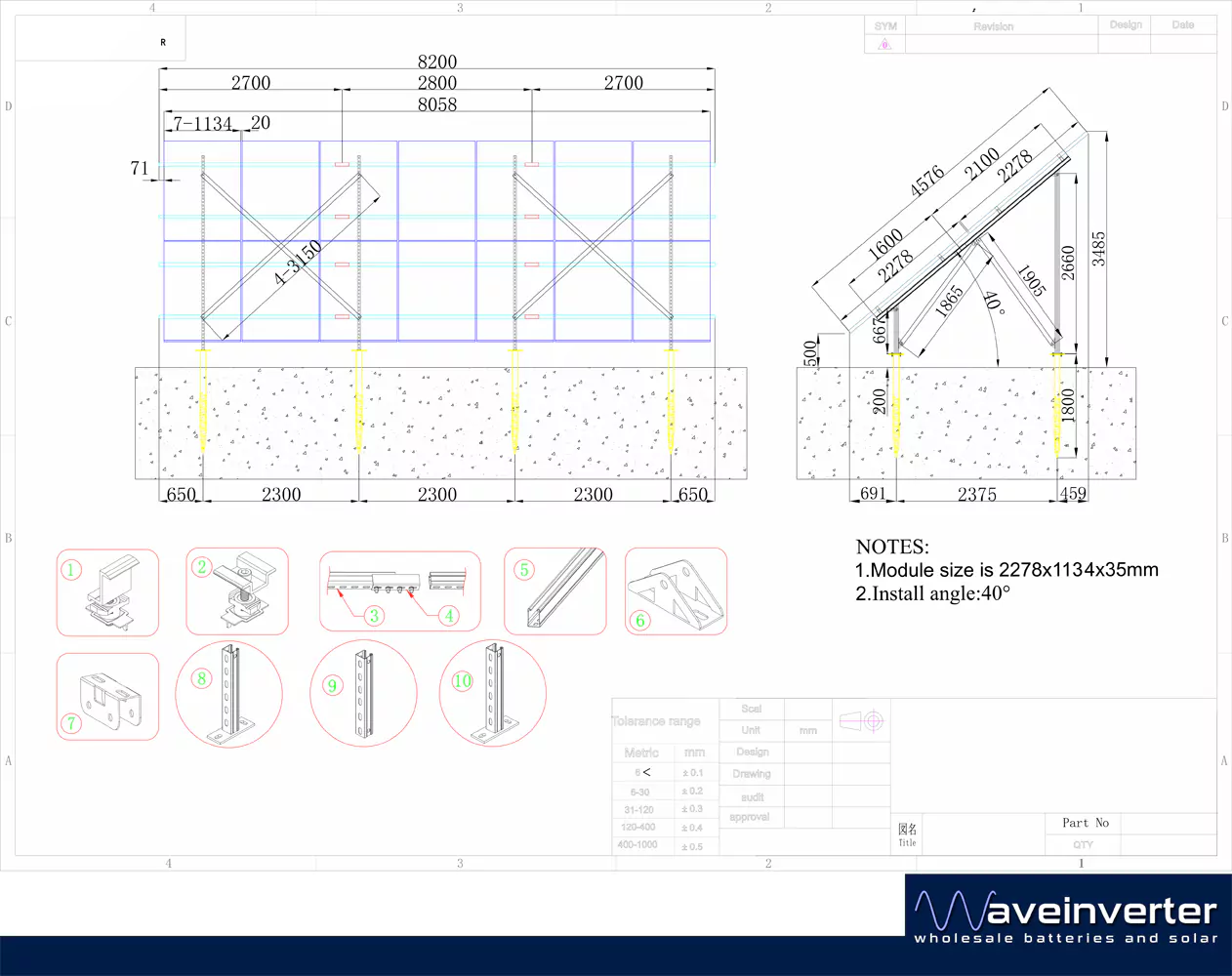
The install guide for our steel ground mounts is here: Steel ground mounting install guide (PDF). The drawings on this page show the 14 panel layout: the eight ground screws go 2300 mm apart along the row and 2375 mm apart front to back, the tilt is 40 degrees, and the heights are marked. Measure the ground before you order: 8.2 m by 3.5 m is the frame itself, not the working space around it for the installation, and the exemptions want it 5 m clear to any house, road, railway or boundary.
Need more than 14 panels?
Put multiple frames side by side. Each frame counts as its own array under the exemptions, so you add frames rather than building one bigger structure. Our 6 panel and 12 panel frames take the same panels in shorter rows, and the panels themselves are in Solar Panels. Installing for a client? See the ground mount racking for installers page. Tell us the wattage you need and we’ll spec the frames and the screws.
Specifications
| Standards | AS/NZS 1170.2 |
|---|---|
| Panels | 14, two rows of seven, portrait |
| Panel size | up to 1134 mm wide x 2400 mm long, 30 mm or 35 mm thick |
| Array power | up to 9500W |
| Tilt | 40 degrees |
| Ground space | 8.2 m x 3.5 m |
| Height | 3.5 m at the top, 500 mm clear at the front |
| Rail length | 8.2 m |
| Bracing | two struts on every leg pair, cross braced end bays |
| Steel | S350 structural steel |
| Coating | ZM275 zinc, aluminium and magnesium, 275 g/m2 |
| Wind rating | 55 m/s max |
| Footings | 8 ground screws (1.6 m or 2.2 m) or 16 dynabolts |
| Clamps | included, for 30 mm or 35 mm panels |
Common questions about the 14 panel ground mount
Do I need a building consent for this frame?
No, in most cases, and your council's district plan tells you which rule applies. On a rural zoned site it fits Schedule 1 exemption 28C, so no consent required, as long as it's held down by more than one post (this one has eight), the top is under 4 m (it's 3.5 m), it sits at least 5 m from any house, road, railway or boundary, and your wind zone is no greater than High or your design wind speed is 44 m/s or less. Outside a rural zone the 28C limit is 20 square metres per array and this frame carries 36+, so it comes under exemption 48 instead: still no consent, but a Chartered Professional Engineer has to review the design and fixings for your site.
Does it need concrete?
No. It stands on eight ground screws that screw into the ground, so there's no digging, no concrete and they come out again if the array ever moves. Already have a concrete slab? Fix it down with 16 dynabolts instead. Screws and dynabolts are sold separately and we supply both.
Which ground screws do I need, 1.6 m or 2.2 m?
It's the ground that decides. Firm ground takes the 1.6 m screws. Softer or uneven ground wants the 2.2 m screws, where the extra length gives more grip on the earth. You need a total of eight for this frame. Tell us what your soil is like and we'll advise.
Will my panels fit?
Any panel up to 1134 mm wide and a variety of lengths of panels. We can fit up to 2400 mm length, no problem, 30 mm or 35 mm thickness, which covers today's large format panels. It holds 14 of them in portrait, two rows of seven. Tell us the panel thickness when you order and the matching clamps come with the kit.
How much wind can it take?
The frame is rated to 55 m/s max, built to AS/NZS 1170.2, the wind loading standard, with no extra bracing or adjustment. The consent exemptions stop at a design wind speed of 44 m/s, or a wind zone no greater than High, so the frame is never the limit. Your site's wind zone is. Exposed site? Tell us where and we'll say.
How much ground does it need?
8.2 m by 3.5 m for the frame itself, with the top of the array 3.5 m up at the back. The tilt is fixed at 40 degrees. That's the frame, not the working room around it for the install. If you're relying on the consent exemption it also has to sit 5 m clear of any house, road, railway or boundary, so measure that before you put in the ground screws.
Can it go on sloping ground?
Yes, it can, and this is where we may use different length ground screws, for example longer ones on the downhill side or in the dips. Tell us about the site and we'll advise.
What's in the kitset, and what isn't?
The steel: rails, legs, the double bracing, the bolts to put it together, and the panel clamps for your panel thickness. Not included: the panels themselves, and the ground screws or dynabolts, which are sold separately so you buy the fixing that suits your ground. Everything else is included.
Why ZM275 rather than hot dip galvanising?
It lasts longer, especially at the cut edges and bolt holes where a galvanised frame usually goes first. ZM275 is a zinc, aluminium and magnesium coating, 275 grams per square metre, put on at the mill before the parts are cut and formed. Plain zinc protects steel by slowly sacrificing itself. Add magnesium and the surface forms a dense, stable layer that corrodes far more slowly. For a frame that spends its whole life outside in New Zealand's salt air, it provides premium protection and longevity.
I need more than 14 panels. Can I go bigger?
Yes, add frames. Put them side by side. Each frame counts as its own array under the exemptions, so you add frames rather than building one bigger structure. Our 6 and 12 panel frames take the same panels in shorter rows if the numbers work out better that way. Tell us the wattage you're after and we'll spec the frames and the screws.
Can I install it myself?
Yes. The frame bolts together using the install guide, the ground screws go in by hand or machine. Two things to allow for. Outside a rural zone, exemption 48 wants a Chartered Professional Engineer to design or review the fixings. And the wiring is a separate matter: grid connected work, and anything above extra low voltage, is a registered electrician's job in New Zealand, while an off grid 12V, 24V or 48V system charging a battery is generally yours to do.
How heavy is it, and how does it arrive?
About 250 kg for the kitset. It arrives on a pallet, to your address or to a freight depot.
Not covered here? Tell us the site, the panels and the wattage you are after, and we will spec the frame and the screws for you.
Additional information
| Shipping weight | 250 kg |
|---|

Reviews
There are no reviews yet.